What is Genocost?
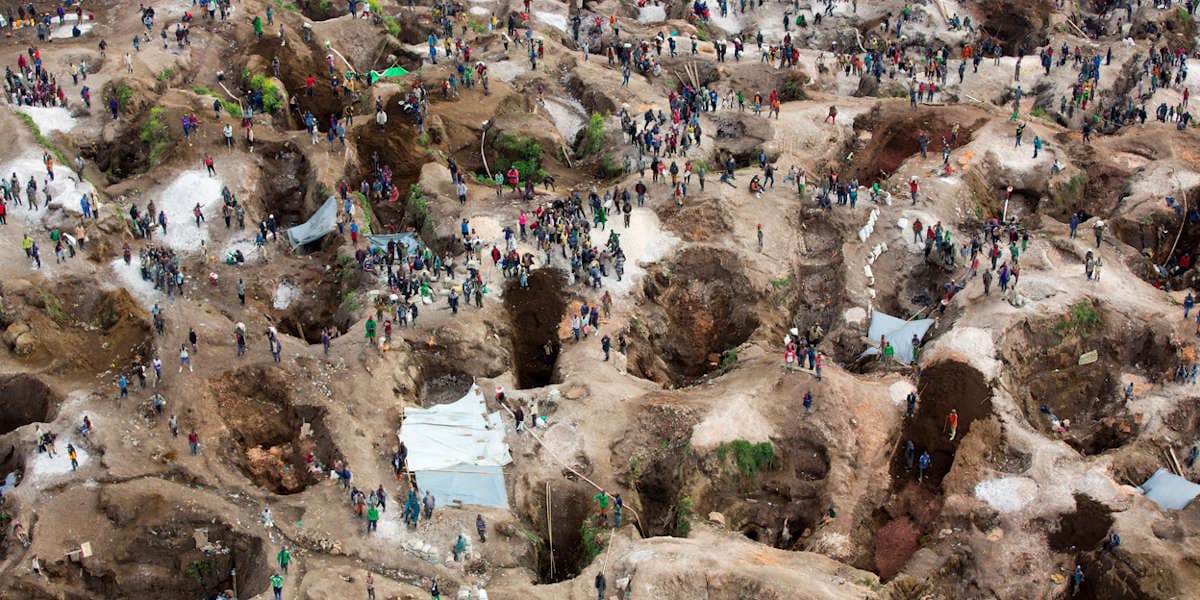
The term "Genocost" is a contraction of "genocide" and "economic cost". It is used to designate what the Congolese government describes as "the extermination of populations through economic exploitation and the pillage of natural resources" in eastern Democratic Republic of Congo since the 1990s.
Contrary to what its growing institutional visibility might suggest, the term was not invented by the government. It was born in London in 2013, from the activist work of the Congolese Action Youth Platform (CAYP), a civil society organisation of the Congolese diaspora. For six years, CAYP organised annual commemorations on 2 August in several cities — London, Toronto, Cape Town — without state support.
In 2022, the Congolese state institutionalised the concept by creating FONAREV through Law No. 22/065. This state appropriation transformed a grassroots movement into a government apparatus — a transformation with which the founders of the concept say they are now deeply dissatisfied.
What is FONAREV?
FONAREV — the Fonds National pour la Réparation des victimes de Violences sexuelles liées aux conflits et Victimes de Crimes contre la Paix et la Sécurité de l'humanité — is a state fund created by Congolese law of 26 December 2022. Its legal mandate: identify victims of armed conflict in eastern DRC, provide psychosocial support, accompany them through legal processes, and deliver financial reparations.
This mandate was legitimate and long-awaited by victims. The reality of its operation is different. Between 2024 and 2025, FONAREV raised approximately $212 million from the Congolese government, international donors, and philanthropic organisations. Less than 2.5% of this sum was distributed to victims — in the form of a school renovation and a memorial construction.
Remaining funds financed prestige memorials, concerts, diplomatic travel, and communication campaigns. In September 2025, a complaint was filed in Brussels against the Tshisekedi family for embezzlement and money laundering linked to FONAREV. In June 2026, CAYP — the very founders of the Genocost concept — publicly denounced FONAREV as a "government farce".
Legal status: what international law actually recognises
The term "Genocost" is not a legal term. It is not recognised in any international convention, treaty, or international criminal tribunal statute. There is no established legal definition of "economic genocide" in international law — unlike genocide as defined by the 1948 Convention, which requires proof of specific intent to destroy a national, ethnic, racial or religious group as such (dolus specialis).
The ICC has been investigating crimes committed in the DRC since 2004 — over twenty years. It has issued no genocide determination for the Congolese conflict. The UN Mapping Report (2010) documents serious crimes, but notes that qualifying them as genocide would require separate judicial proceedings and proof of specific intent. In October 2025, the Congolese Parliament adopted a resolution recognising Genocost — but a national parliamentary resolution carries no weight in international criminal law.
The time period covered, the number of victims cited, and the qualifying criteria vary across official FONAREV statements depending on context and audience. This instability of criteria weakens the coherence of the case presented to the international community.
The internal contradictions of the Genocost framework
Several analysts note a selectivity in the designation of those responsible for Genocost. The individuals most often implicated are former members of the RCD-Goma, RCD-Kisangani and MLC rebellions. Yet many former leaders of these movements, now integrated into the Tshisekedi government, participate in Genocost commemoration ceremonies — including Jean-Pierre Bemba, former MLC leader, now Deputy Prime Minister, and Ève Bazaiba, former MLC cadre, now Minister of State.
This difference in treatment raises questions about the criteria used to assign responsibility. It risks weakening the coherence and credibility of the message carried by the organisers, and may give the impression that the designation of those responsible follows political rather than legal or factual logic.
Furthermore, serious cases of economic crime involving Congolese officials — the "100-day project", the RAM scandal, embezzlement in drilling and lighting programmes — are absent from the Genocost framework. If the concept targets serious economic crime at the expense of populations, the selectivity of its application raises legitimate questions about its coherence.
This dossier examines FONAREV's four claims one by one.